Design Museum Foundation
Inspiring Careers
The Design Museum Foundation is a nomadic museum that educates and celebrates all things design.
In 2018, they aimed to increase diversity in the design landscape with the Inspiring Careers initiative. The approach was to generate interest in design fields by reaching out to underprivileged students, and highlighting people of color in design.
This is how I helped connect underserved students and design mentors.
Platform
Responsive website
Timeline
3 Week design sprint
Team
Russell Greene, Annalyse Tamashiro, Schyler Versteeg, Yi David Yang
Disciplines
User Research
Information Architecture
Visual Design
Axure RP
Paper sketching, user journeys, user flows, wireframes, paper prototyping, site map, clickable prototype
Problem
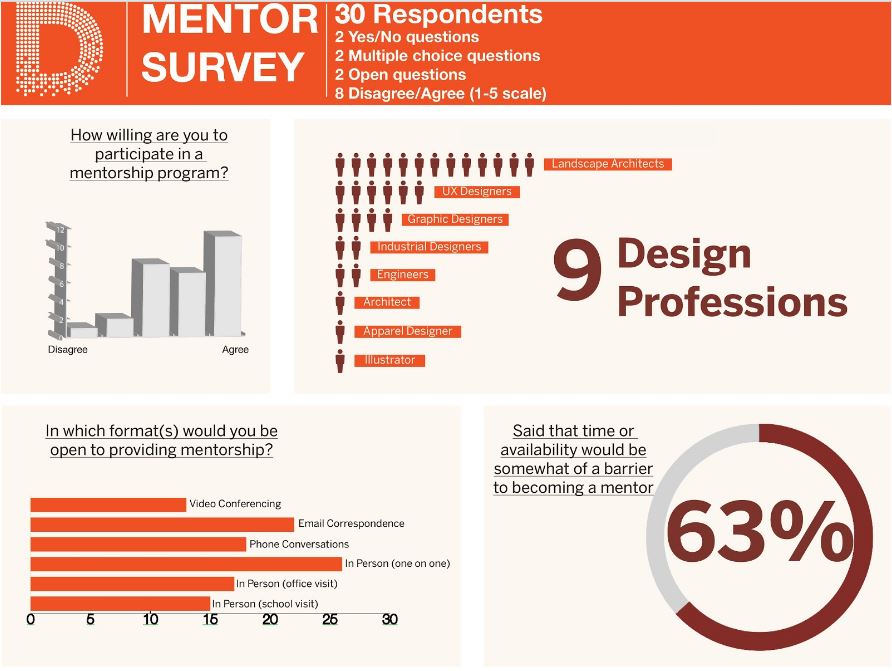
Professional designers are willing to connect and mentor students on any platform, but are limited by time and availability.
Design mentees want to gain practical knowledge and hands-on experience, but have limited opportunities to engage or seek out professional designers.
Solution
A responsive web platform to connect mentees with design professionals at the workplace.
Jump to: Background | Discovery | Ideation | Execution | Outcome
Discovery
Competitive Analysis - online and offline mentorship platforms
- The traditional models of mentorship are one-on-one relationships, and structured after-school programs.
- Most mentorship programs have a minimum level of commitment regarding time.
- Mentorship programs are often based on the academic calendar; through the summer, through the school year, or year-round.
- Online mentorship platforms feature mentor profiles which list their skills and areas of expertise.
- Offline mentorship programs required a lot of staffing and manpower to run and facilitate.


Interviews
Design Mentors:
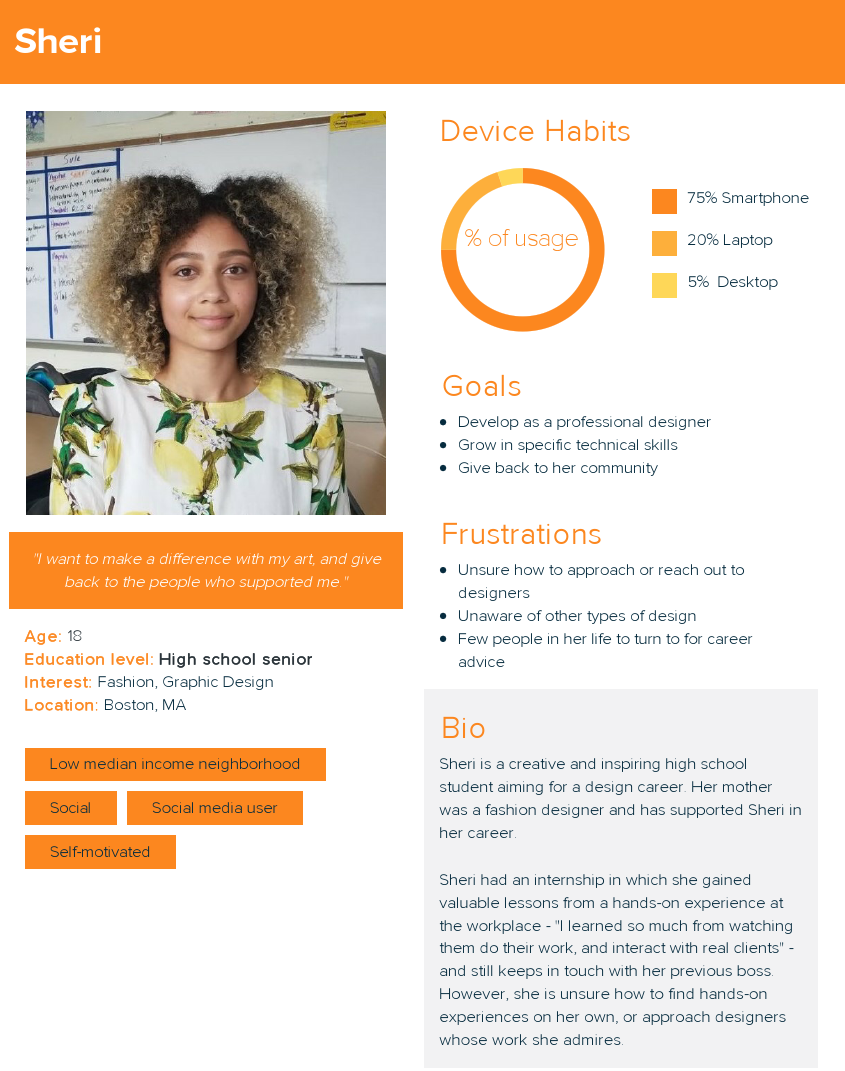
Mentee trends:
“I value practical knowledge and experiences.”
“I have people who support my career.”
“I seek opportunities to connect with designers (but I’m not sure how to approach them).”
“I use my smartphone more than computers.”
Design mentees want to gain practical knowledge and hands-on experience, but have limited opportunities to engage or seek out professional designers.
Mentor Trends:
“I can give ___ of of hours to mentorship.”
“I’d be willing to host mentees at my workplace.”
“I believe mentorship is a mutually beneficial relationship.”
“My mentoring relationships grew organically.”
“I am comfortable communicating on any platform.”
Professional designers are willing to connect and mentor students on any platform, but are limited by time and availability.
Ideation
A responsive web platform to connect mentees with design professionals at the workplace.
Complications
The challenge and complication which would continue to compound was the physical duality to most of our digital features. We wanted to keep the DMF’s original vision of the workplace visit, which fit a niche in the mentorship landscape and was very high impact.
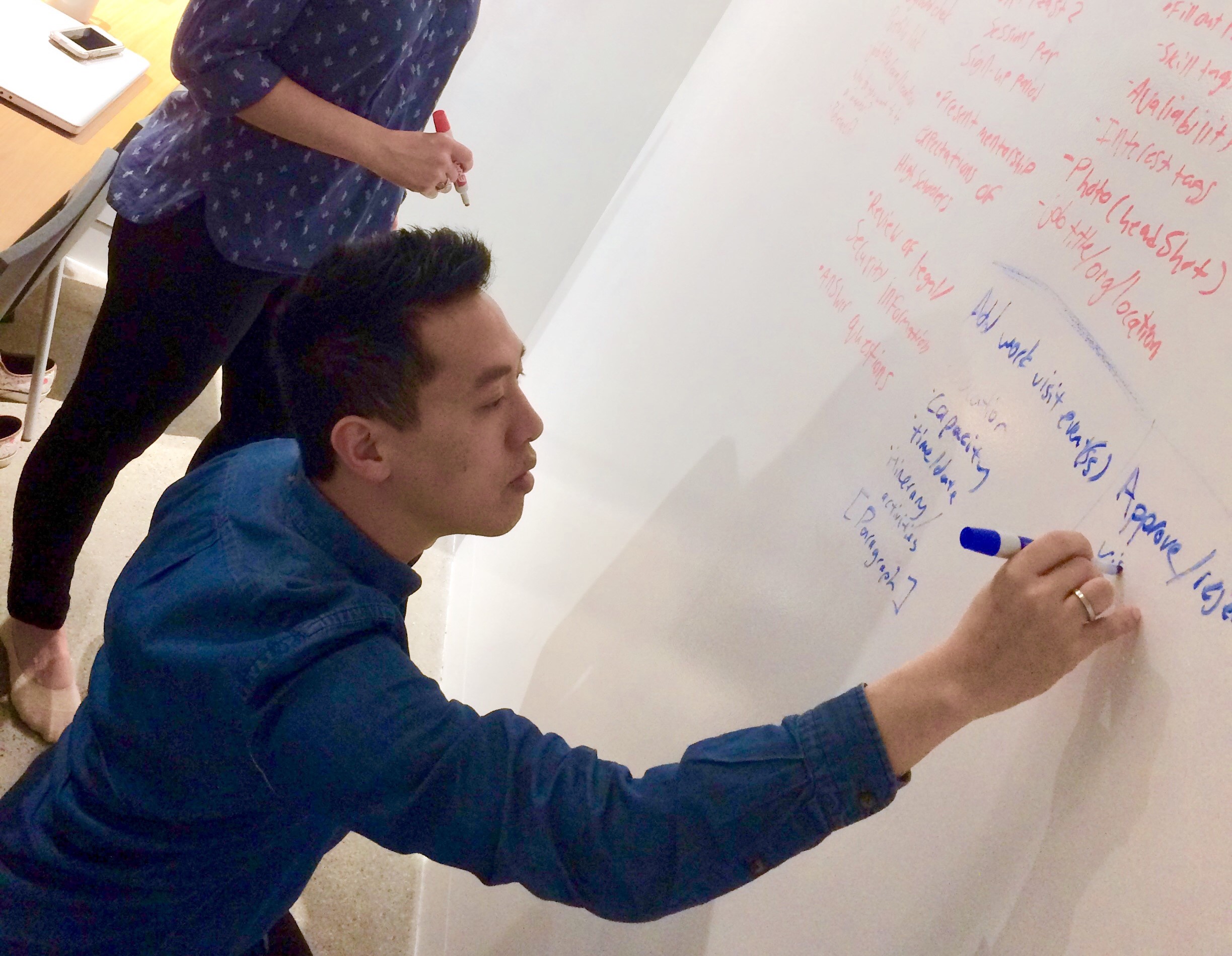
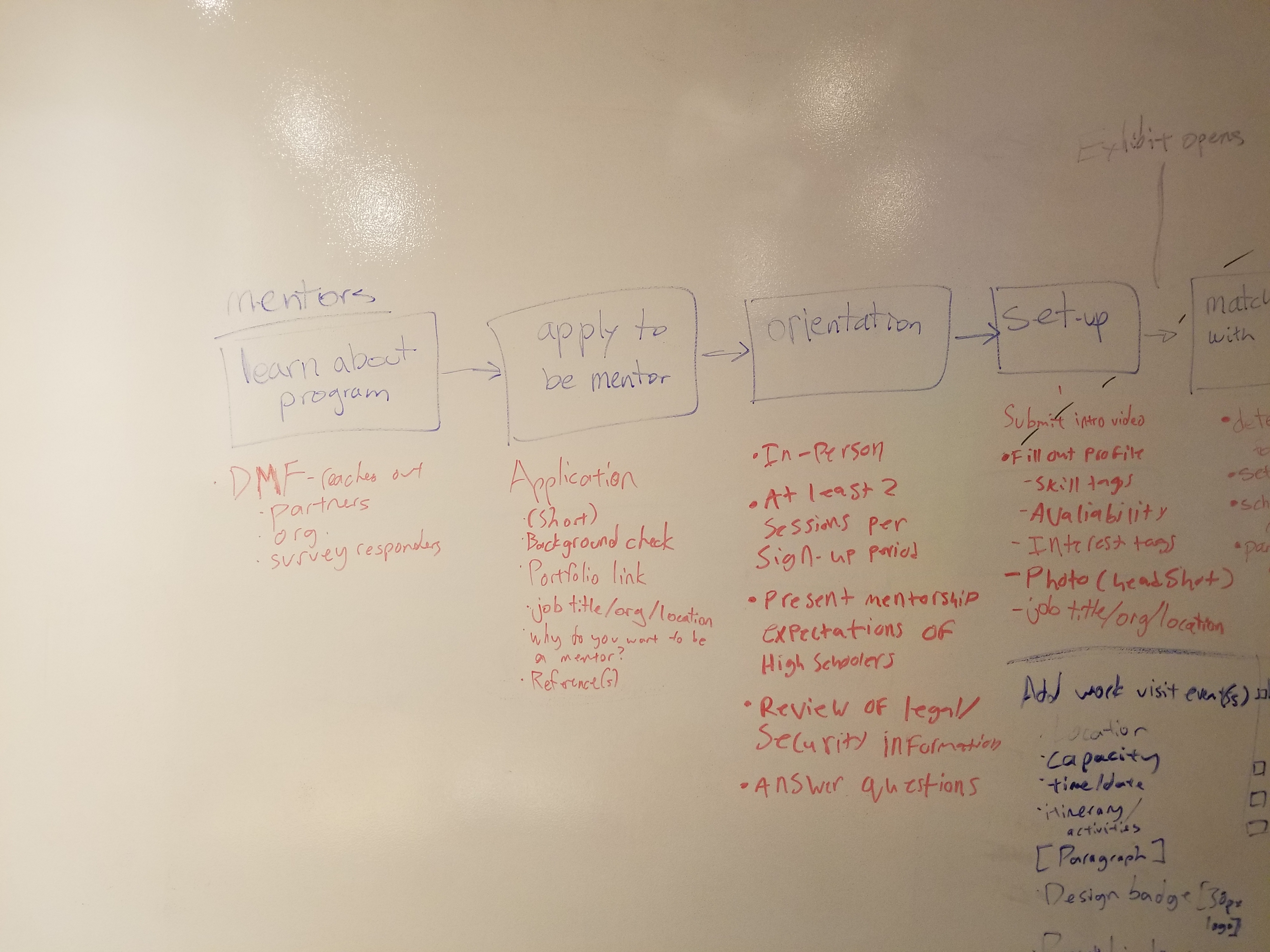
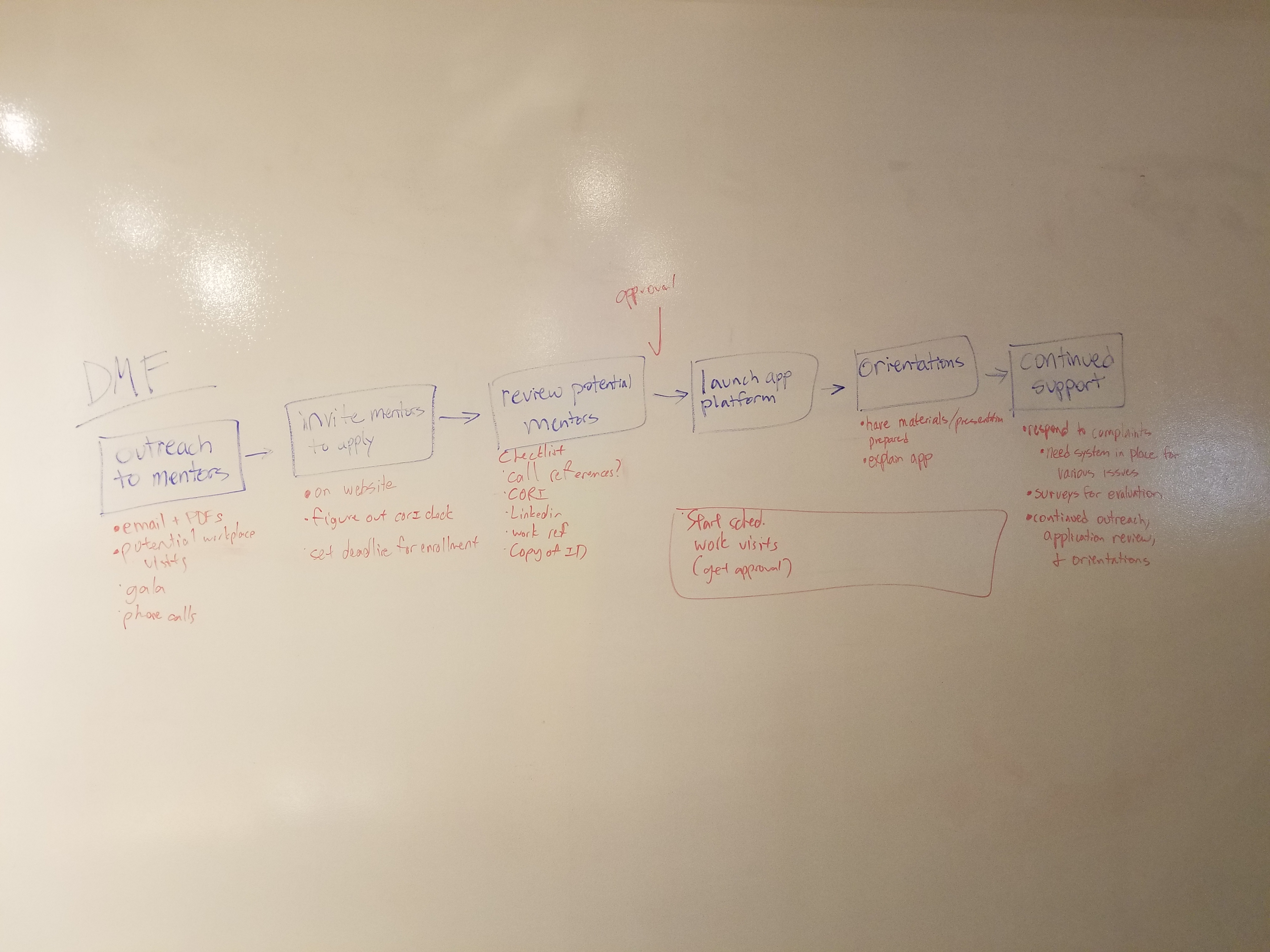
As we talked through and drew out the high-level flow of the mentorship relationship for both sides, we realized there were many touchpoints to the process that we needed to account for. For example, we needed to integrate an official sort of vetting and background check of the mentors before they could sign onto the platform. We also wanted to integrate an important tertiary user, the parent, throughout the process.
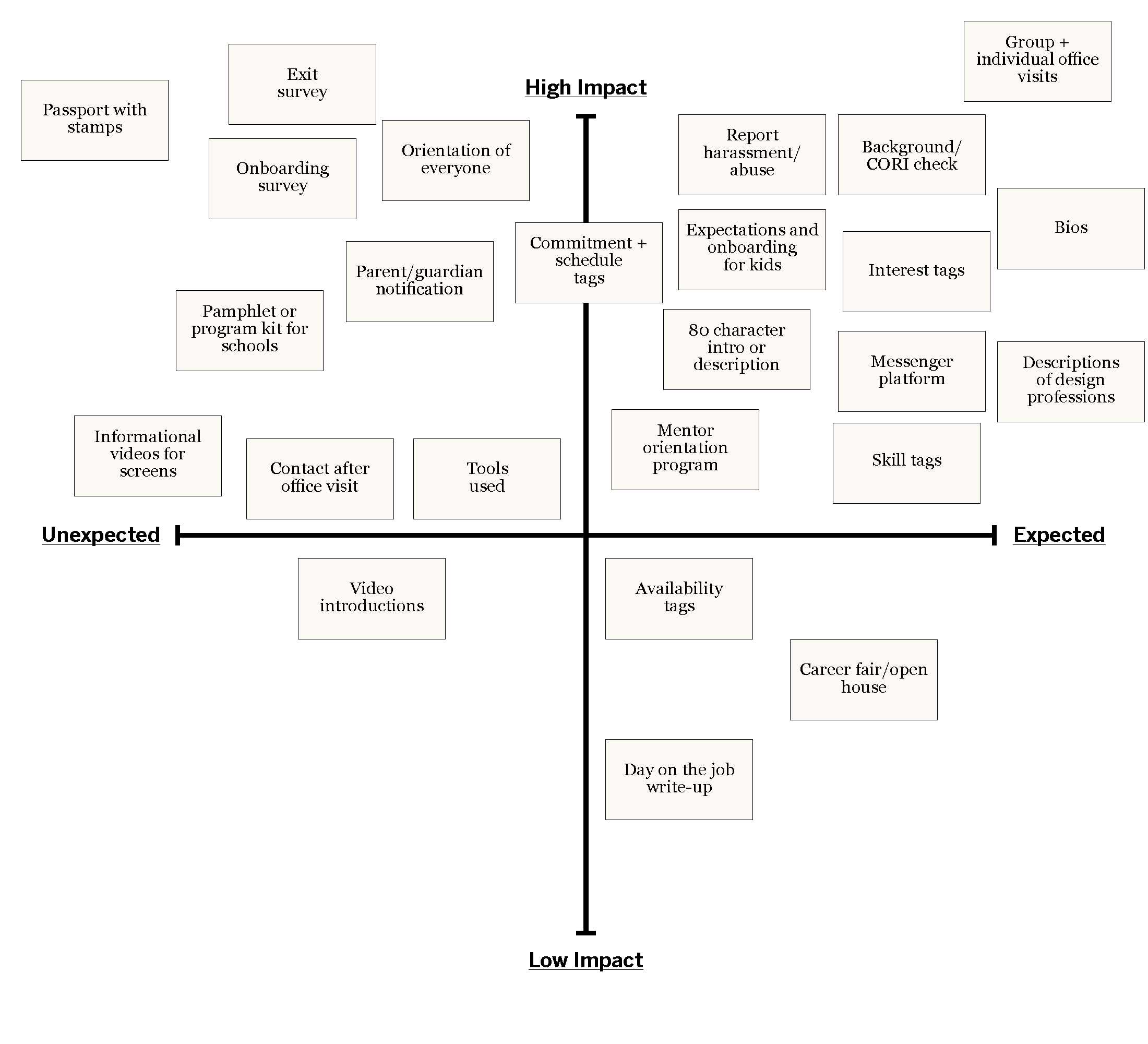
High Impact, unexpected
- Passport with stamps
- Exit survey
- Onboarding Survey
- Orientation
High Impact, expected
- Group/individual office visits
- Background/CORI check
- Expectations and onboarding for mentees
- Interest Tags
- Expectation and onboarding for kids
User Flows
We integrated and visualized the flows for all three parties - the mentors, the mentees, and the Design Museum - to align and understand the specific place where the web platform would fit in, and where to integrate our features - offline or online.
Process
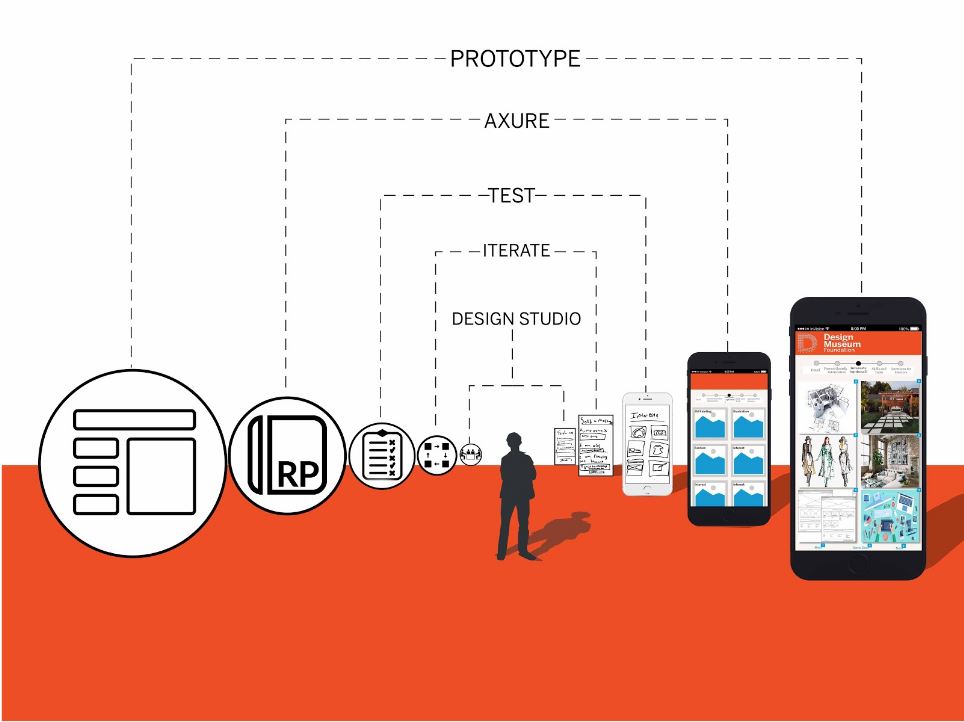
Execution
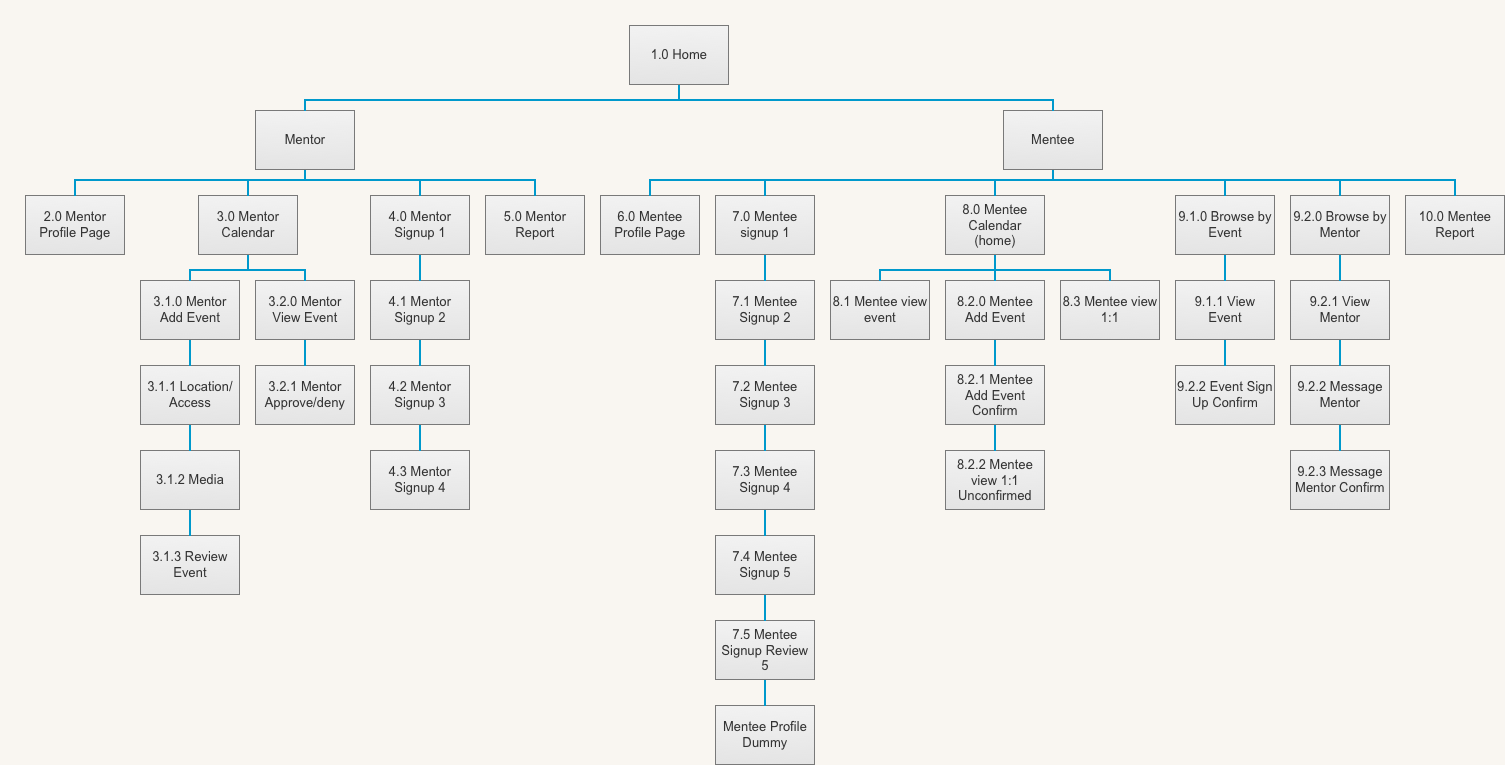
Refinements from user testing
-
Copy - I changed the tone of most of the copy on the Mentee’s side to be more appropriate for young people.
-
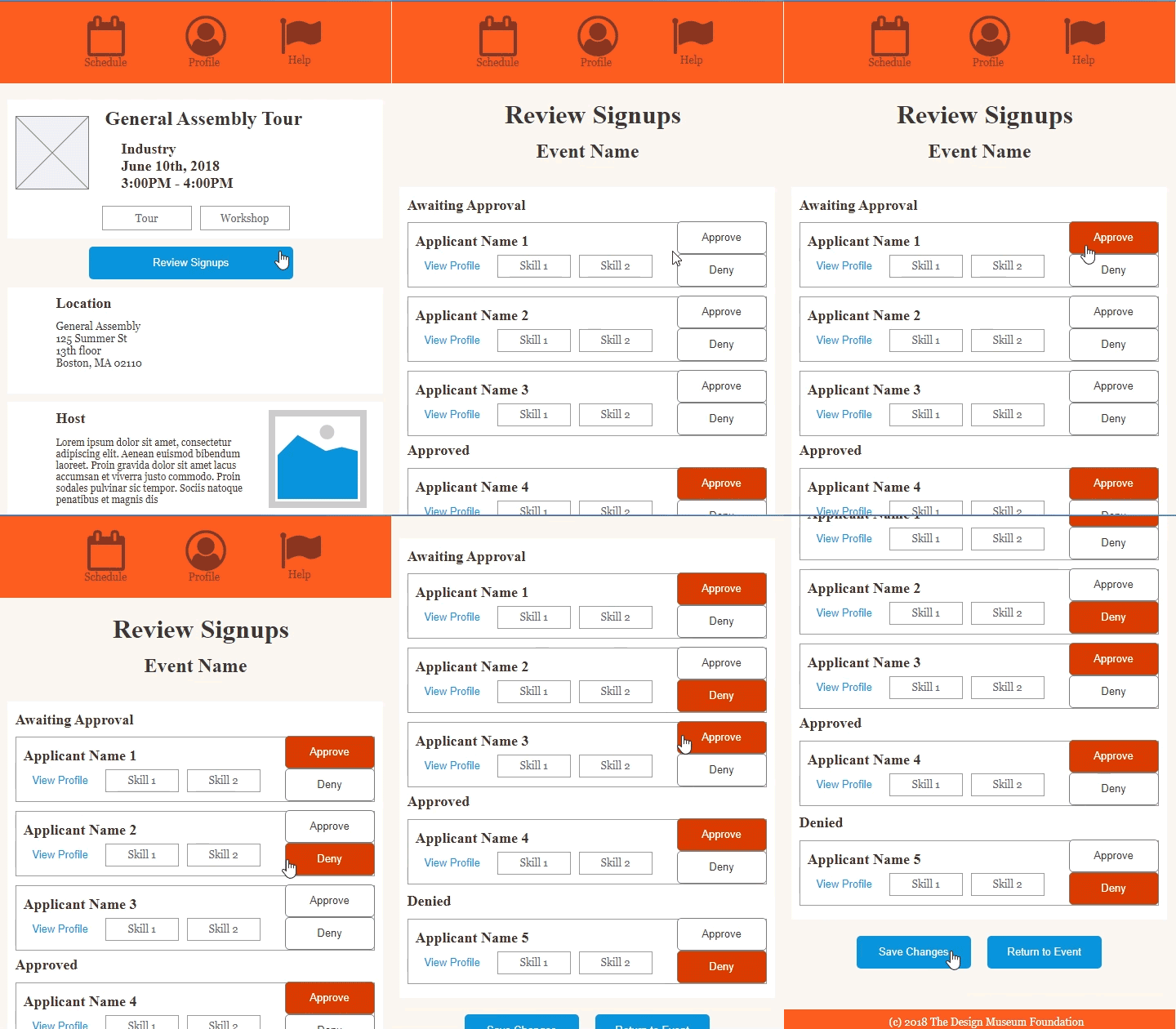
Profile and event creation flow - instead of breaking down the event creation process to multiple pages, I consolidated most of them into one page, and made it into a long scroll.
Outcome
Next Steps
-
Research to understand and implement best practices for consent and involvement of minors on the platform.
-
User testing the prototype more, especially with the mentee side.
-
Creating and building out on-boarding materials to help align the goals and language of both mentors and mentees.
Reflections
- Energized by mission. In addition to Sam’s compelling vision, I immediately bought into the mission of the Design Museum Foundation’s initiative in serving underprivileged youths. I wanted to conduct robust research, make data-driven design decisions, and design impactful features because I really feel the potential for impact.
- Playing well with others, by playing to my strengths. I initially thought I was just filling in the gaps of what was still needed, after prioritizing my team members to apply and thrive in their strength areas. Instead, my team had implicitly stepped out of the way of the UI design and ideation because they saw that was my strength as well.